The infinitive mood is used when the infinitive of a verb is the subject of a sentences. In English the -ing form of the verb is used. For example, “Travailler le week-end n’est pas amsuant” (working on the weekends is not fun). In the negation ne…pas precedes the infinitive. French infinive mood Most common usage: …
French Grammar
The French present participle (participe présent) is formed by dropping the -ons on the nous form of the verb in the present tense and adding -ant. This is the equivalent of the -ing ending in English. For example, nous parlons -> parl -> parlant (speaking). The gerund (le gérundif) is formed by preceding the present …
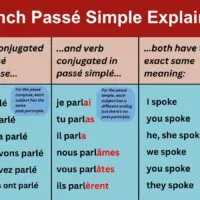
What is the French passé simple? The French passé simple is a past tense that equates grammatically to the passé composé. Yet, it’s generally overlooked and not learned. This post demystifies the passé simple for students of all levels. What is the French passé simple? The passé simple (simple past or past definite) is a …
In French, the “plus-que-parfait” or pluperfect tense is used to indicate actions that occurred prior to other past actions. It would equate to “had happened” in English. For example, “Je n’ai pas mangé à 18h00 parcé que j’avais dejà mange à 16h00” (I didn’t eat at 6pm because I’d already eaten at 4pm). Plus-que-parfait For …
The preposition de in French (pronunciation: də) means both of and from. De is one of the most widely used preposition in the French language. This page provides a complete list of its usages with example sentences. French preposition de List of usages of de in French De is used to expression possession De can …